Food
-
The distance food travels from where it is produced to where it is eaten.
-
Bringing food into a country from another country.
-
Sending food from one country to another country.
-
Countries around the world becoming more connected through trade, travel and communication.
-
Buying and selling goods between countries.
-
Machines and tools that help produce, store and transport food.
-
How food is moved (ships, planes, lorries).
-
Ways countries share information to buy and sell food (internet, phones).
-
How easy it is to get food.
-
Food grown without chemical fertilisers or pesticides.
-
Materials used to protect food (plastic, cardboard, glass).
-
Not having enough food to stay healthy.
-
When people have enough safe and nutritious food all the time.
-
When people do not have regular access to enough food.
-
Long-term changes in climate that affect farming and food supply.
-
Fighting or war that disrupts farming and food transport.
-
How expensive food is for people to buy.
-
Extreme scarcity of food, which can lead to widespread hunger and malnutrition.
-
Not having enough money to meet basic needs, including food.
-
Food that is thrown away instead of eaten.
-
Large shops that sell food and household goods.
-
Plants grown by farmers for food.
-
Growing crops and raising animals for food.
-
When food or items break down naturally over time.
-
Gases released into the air, such as carbon dioxide or methane.
-
A place where rubbish is buried.
-
Plastic waste that harms the environment.
-
Very small pieces of plastic found in water and food.
-
A light plastic often used in food packaging.
-
Plastic used once and then thrown away.
-
Materials that are reused to make new products.
-
How energy moves from plants to animals in an ecosystem.
-
A large circular movement of ocean water that collects plastic.
-
Rubbish that is not collected or disposed of properly.
-
Large movements of water in the ocean.
-
When there is not enough food for everyone.
-
A long period with very little or no rain.
-
Chemicals or natural materials added to soil to help crops grow.
-
Limiting how much food people can buy.
-
Dishonest behaviour by people in power.
-
Crops changed in a lab to grow faster or resist disease.
-
Bringing water to crops using pipes or channels.
-
Growing plants using water instead of soil.
Start of content
Where Does Our Food Come From?
Where does our food come from?
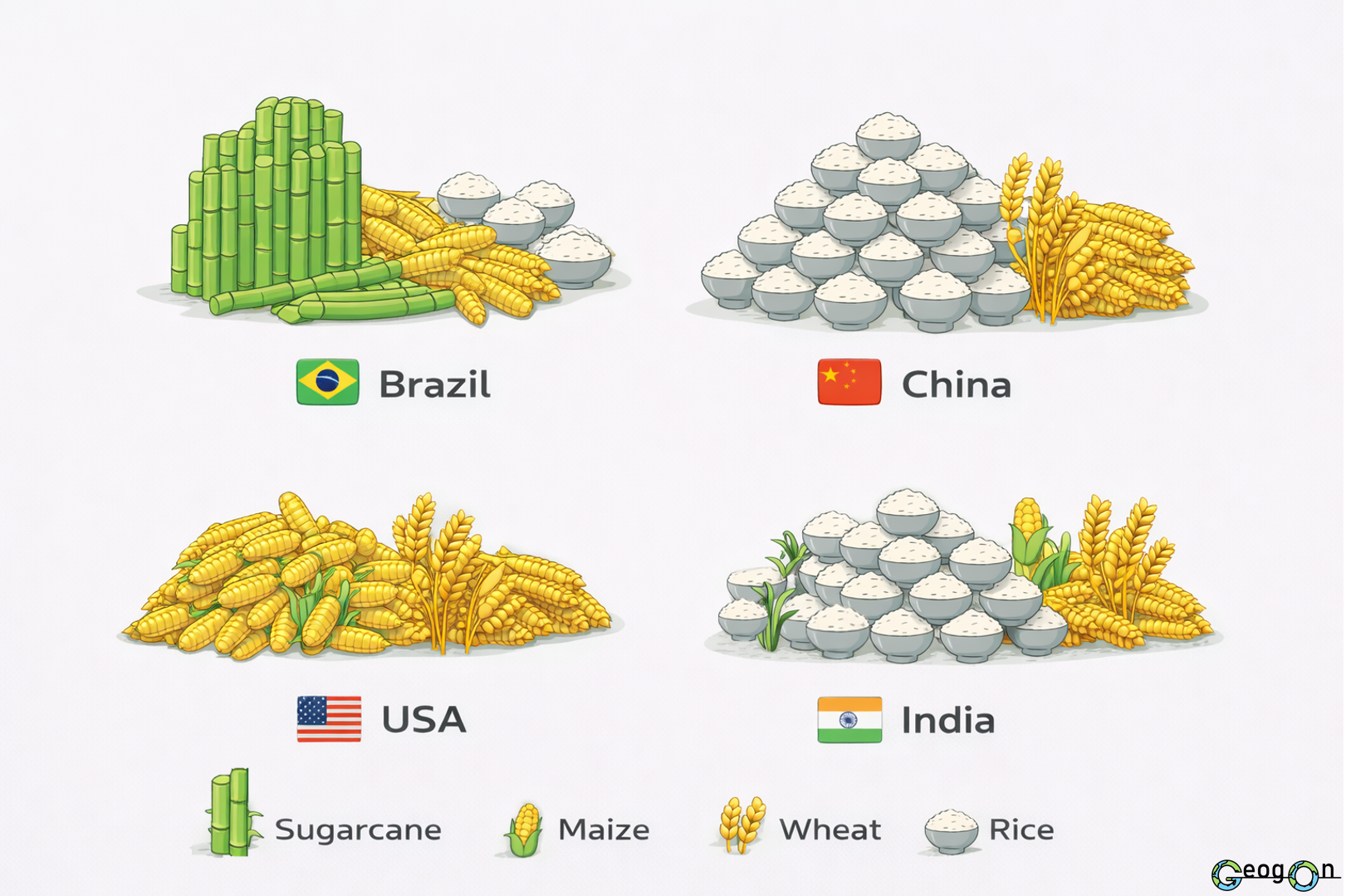
A large proportion of the world’s food is produced by just four countries: Brazil, China, India and the USA. These countries grow huge amounts of key staple crops such as sugarcane, maize, wheat and rice, which are eaten locally and exported around the world. Their large land areas, different climates, advanced farming technology and strong transport networks allow them to produce food on a global scale.
Food Fact: 50% of total global crop production comes from sugarcane, maize, wheat and rice from just four countries.
Why has global food trade increased?
Global food trade has increased because countries are more connected than ever before. Improvements in transport, technology and communication mean food can be produced in one part of the world and sold in another quickly and cheaply. This has increased food choice, availability and trade between countries, linking farmers, businesses and consumers on a global scale.
Transport
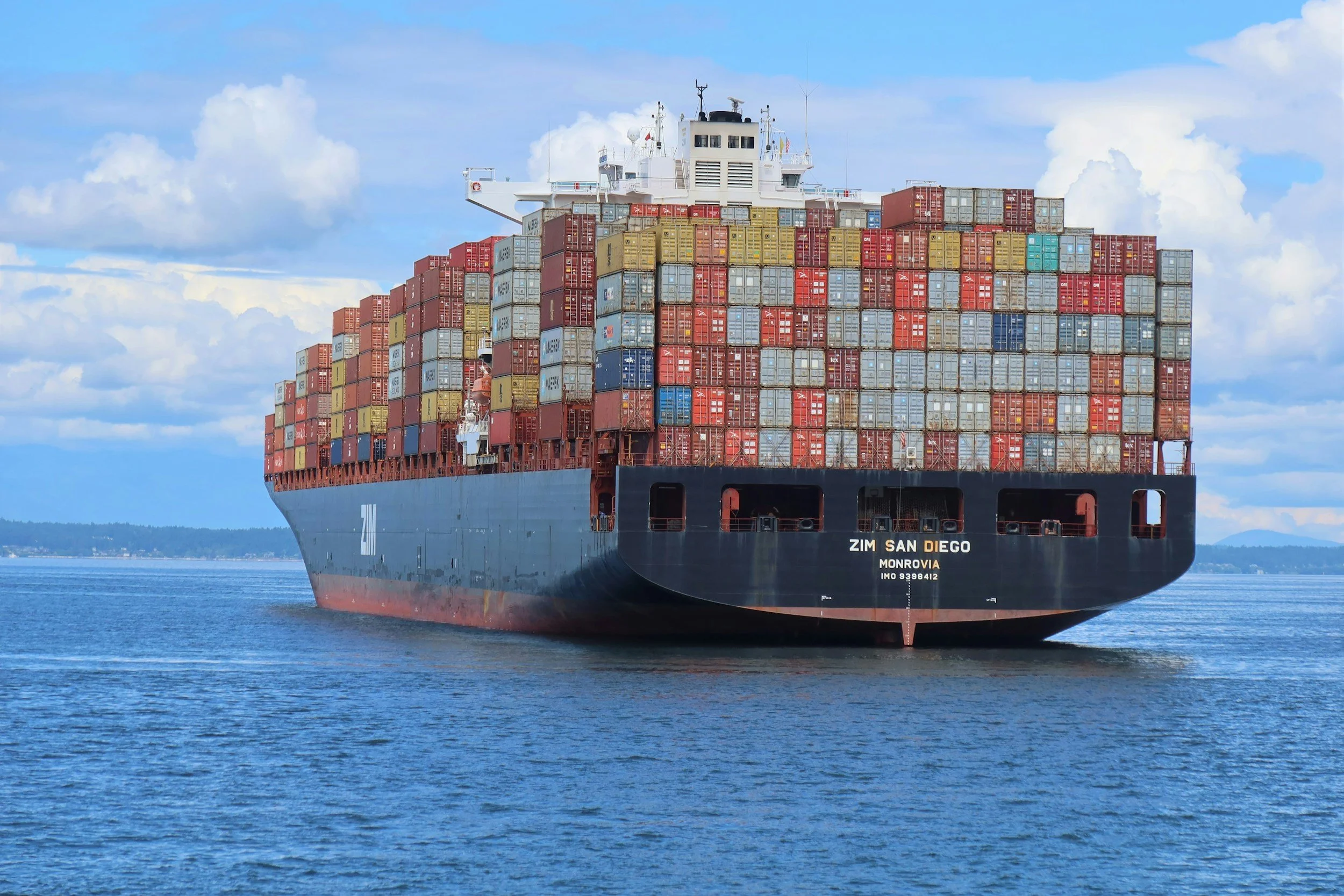
Modern transport systems have made it easier to move food around the world. Container ships, refrigerated lorries and air freight allow large quantities of food to travel long distances while staying fresh. Faster and cheaper transport has reduced food spoilage and made imported food more affordable.
Technology
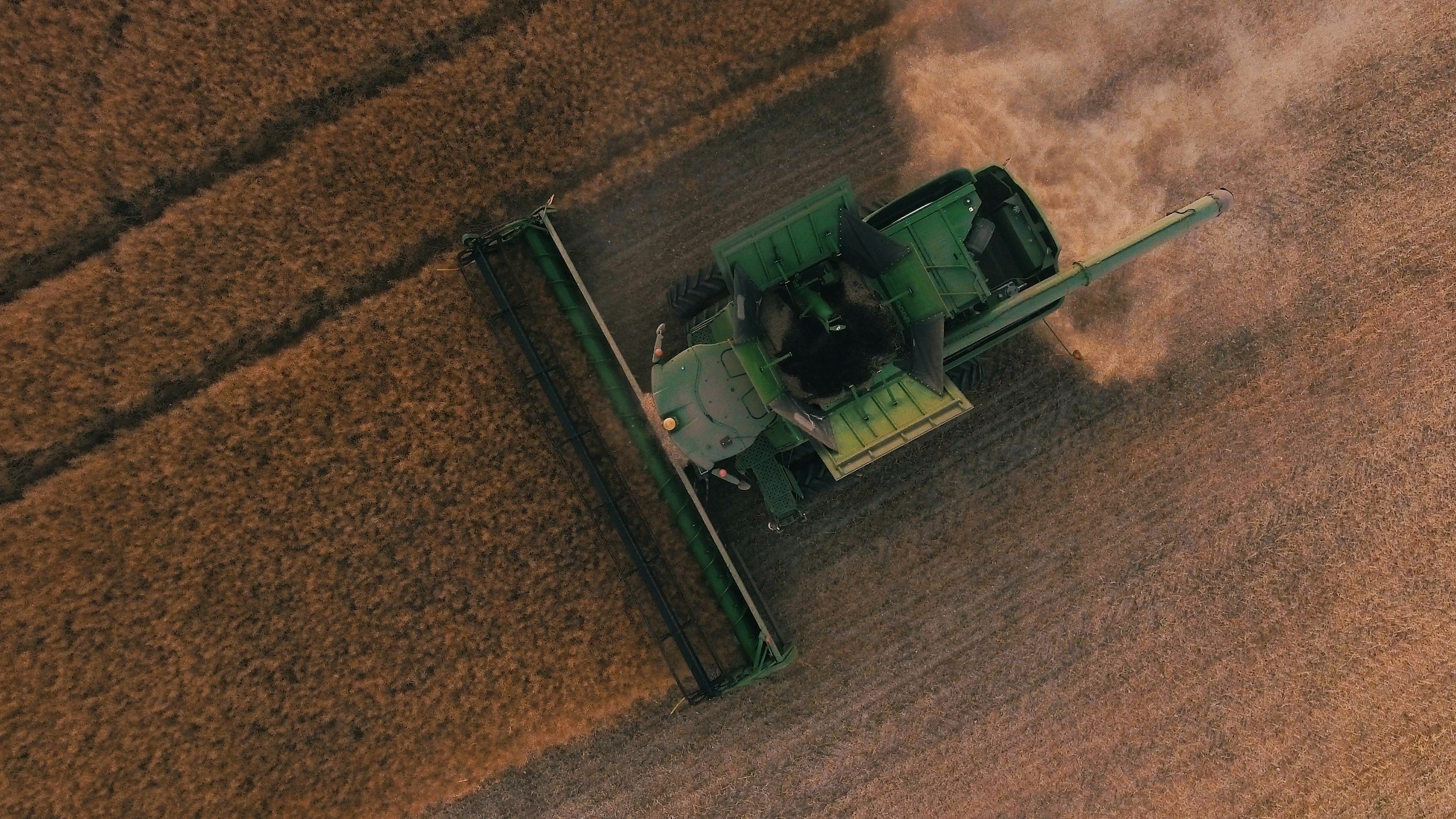
Advances in farming technology have increased food production. Machinery, fertilisers, irrigation systems and genetically modified crops help farmers grow more food on the same amount of land. This creates food surpluses, which can be exported and traded with other countries.
What are food miles?
Food miles are the distance food travels from where it is produced to where it is eaten. Food can travel by ship, plane, lorry or train. The greater the distance, the higher the food miles.
Why are high food miles a problem?
High food miles have a negative environmental impact.
More emissions – Transport releases carbon dioxide, which contributes to climate change.
Air freight is very polluting – Flying food produces much more CO₂ than shipping or road transport.
More packaging – Long-distance food often needs extra plastic packaging to keep it fresh.
Less sustainable – Imported food can replace local produce, increasing dependence on global trade.

Communication
Improved communication has made global food trade faster and more efficient. The internet allows countries, companies and farmers to buy and sell food easily, compare prices and respond to changes in demand. This has encouraged global trade and specialisation in certain crops.
Foods with high food miles
Fresh fruit such as strawberries, grapes and blueberries flown across continents
Out-of-season vegetables grown in distant countries
Avocados transported long distances by ship and lorry
Beef and lamb exported between continents
Seafood caught in one country, processed in another, and sold elsewhere
Patterns in global food importers and exporters
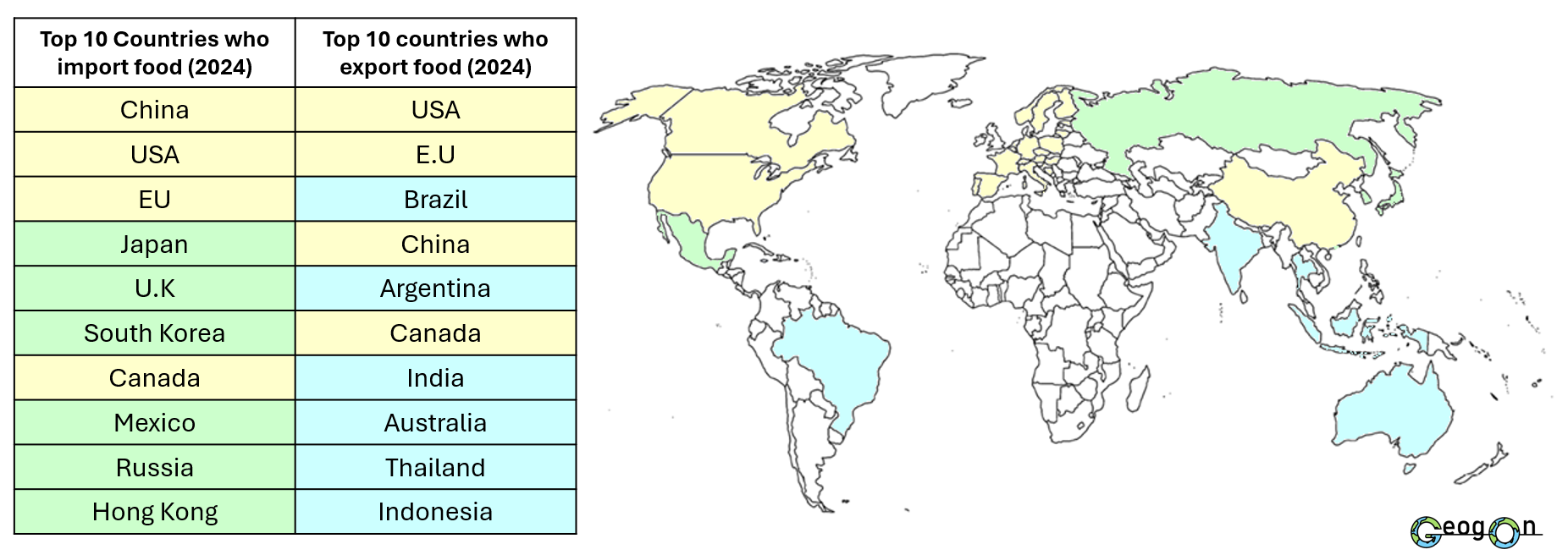
The world’s top food importers are mostly wealthy, highly populated or urbanised countries, such as China, the USA, the EU, Japan and the UK. These countries often have high food demand but limited farmland, high population density, or diets that rely on a wide variety of foods. As a result, they import food to meet demand and to provide year-round choice.
In contrast, the world’s top food exporters are countries with large land areas and strong agricultural sectors, such as the USA, Brazil, Argentina, Canada and Australia. These countries have more space for large-scale farming, suitable climates, and advanced farming technology. They produce food surpluses, which are sold to other countries.
Overall, the pattern shows that rich, densely populated countries tend to import food, while countries with large rural areas and strong farming industries tend to export food. This creates global trade links between producers and consumers across continents.